


Ár gCluichí Féin by Aidan Harte, photo by Debbie Hickey, 2026
“The Gaelic Athletic Association was founded in Thurles, Co. Tipperary in 1884. Since then, Gaelic Games have been played with passion and pride in Semple Stadium and around the world. This sculpture by Aidan Harte represents the spirit that built the GAA and which nurtures it today.”
This is the text of the plaque that accompanies the statue Ár gCluichí Féin (Our Own Games) created by Aidan Harte in commemoration of the establishment of the Gaelic Athletic Association (GAA) in Thurles. Its placement at the entrance of FBD Semple stadium in July 2026 marks the end of a two-year process from an open call for artists to unveiling the final work.

Photo by Debbie Hickey, 2024
The GAA is the largest amateur sporting organisation in the world. It was founded in 1884, in Hayes Hotel, Thurles, Co. Tipperary to revive and nurture traditional Gaelic games and pastimes. The Ladies Gaelic Football Association was founded in the same hotel in 1974.
In celebration of the 140th anniversary of the foundation of the GAA in 2024, Tipperary County Council in partnership with Tipperary GAA and FBD Semple Stadium announced an exciting new project to recognise this important aspect of our cultural heritage. Tipperary County Council invited artists to make submissions for the creation of a permanent public artwork to commemorate and celebrate Tipperary as the birthplace of the GAA. The artwork was to recognise the grace, beauty and skill of Gaelic Games and to also celebrate Tipperary’s pride in being the birthplace of the GAA and its enduring commitment to Gaelic games, particularly at the FBD Semple Stadium venue.
The tender for the Tipperary GAA Public Art Commission was published in May 2024 and open to all artists that could fulfil the brief. After a two-stage public art commissioning process, a panel of arts experts and members of Tipperary GAA selected the design by Aidan Harte in October 2024 as the successful proposal.
Harte studied Classical Sculpture at the Florence Academy of Art. He makes bronze sculptures, is a writer and director. He has exhibited widely, and his work features in collections in Ireland and the US. He has given lectures at festivals and schools. His first public sculpture, the Púca, was unveiled in Co. Clare in 2022. He is currently working on his third public sculpture. For more information about the artist, click here.

Sketch by Aidan Harte, 2024
Harte’s father hurled in Semple Stadium in the 1970s. The artists’ proposal reads: “The Footballer has the ball. Without breaking stride, she glances over her shoulder and weighs options. The Hurler darts forward - sliotar gripped in his left hand, hurl in his right. […] Both figures balance on one foot, facing different ways - whichever side you approach the sculpture, you’re in the action. […] Together they form a V composition - V or Victory!” The two figures form a perfect balance and are equally fit to perform the athletic task at hand. The sculpture embodies ‘possession’: both possession of the ball and being possessed by the spirit of the game.
The large bronze sculpture has to go through several phases of creation before it can be installed and unveiled.
The process begins with the artist developing his idea into a physical form. The artist already created two smaller versions of the sculpture for the commissioning process.
Once the panel chose the successful proposal, the artist could start the large-scale artwork.
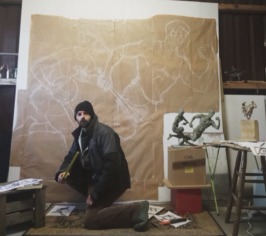
The first preparations for the large sculpture, photo courtesy of artist
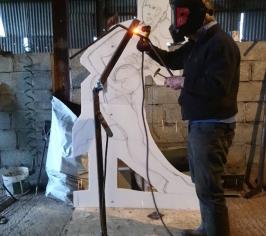
Armature being made, photo courtesy of artist
First, a strong armature that could carry the weight of the large clay sculpture was made. It is the skeleton on which the clay is applied and shaped. The artist focuses on form, proportion, and detail, knowing that every mark will be captured in the final piece. This original clay sculpture serves as the foundation for all the steps that follow.

Sculpting the statue, 2025, photo courtesy of artist

Finishing touches, 2025, photo courtesy of artist
After several months, once the clay model is complete, a mould is made to capture its exact shape. This mould is often made from flexible materials like rubber, supported by a harder outer shell. It allows the foundry - a specialised factory that can melt and pour liquid metal into specially shaped moulds to produce metal castings - to reproduce the sculpture accurately and to create multiple versions if needed. The mould preserves every texture and detail from the original work.

Mould being made, photo courtesy of artist
After the mould is prepared, a wax replica of the sculpture is produced. For this process – due to the large size of the overall artwork - the two sculptures are taken apart in pieces and moved to the Foundry.
Hot wax is poured or brushed into the moulds, creating a hollow copy of the original. This wax version is carefully refined, with any imperfections corrected by hand. At this point, additional wax rods called sprues may be attached to create channels for the movement of metal and air during casting.

Artist applying wax to the mould, photo courtesy of artist
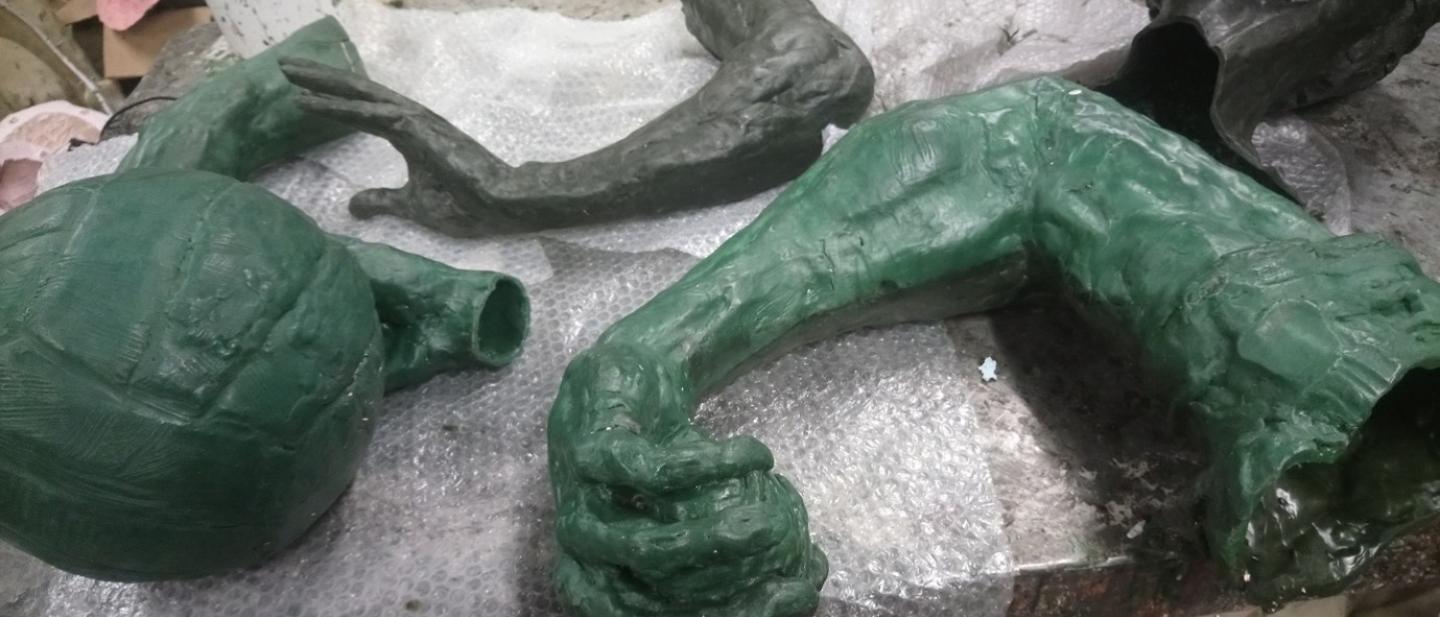
Limbs in wax, photo courtesy of artist
The wax pieces are then coated in layers of ceramic or heat-resistant material to form a strong outer shell. This process, known as investment, builds up a durable mould around the wax. The coated pieces of sculpture are then heated in a kiln, causing the wax inside to melt and drain away, leaving behind a hollow cavity in the exact shape of the sculpture. This step is what gives the process its name: “lost-wax casting.”

Wax melting away, leaving a durable mould, photo courtesy of artist
Next comes the casting stage, where molten bronze is carefully poured into the prepared moulds. The liquid metal fills the empty cavity left by the wax and takes on all its details. Once the bronze cools and solidifies, the outer shell is broken away, revealing the raw bronze sculpture underneath.

Pouring the bronze, photo courtesy of artist
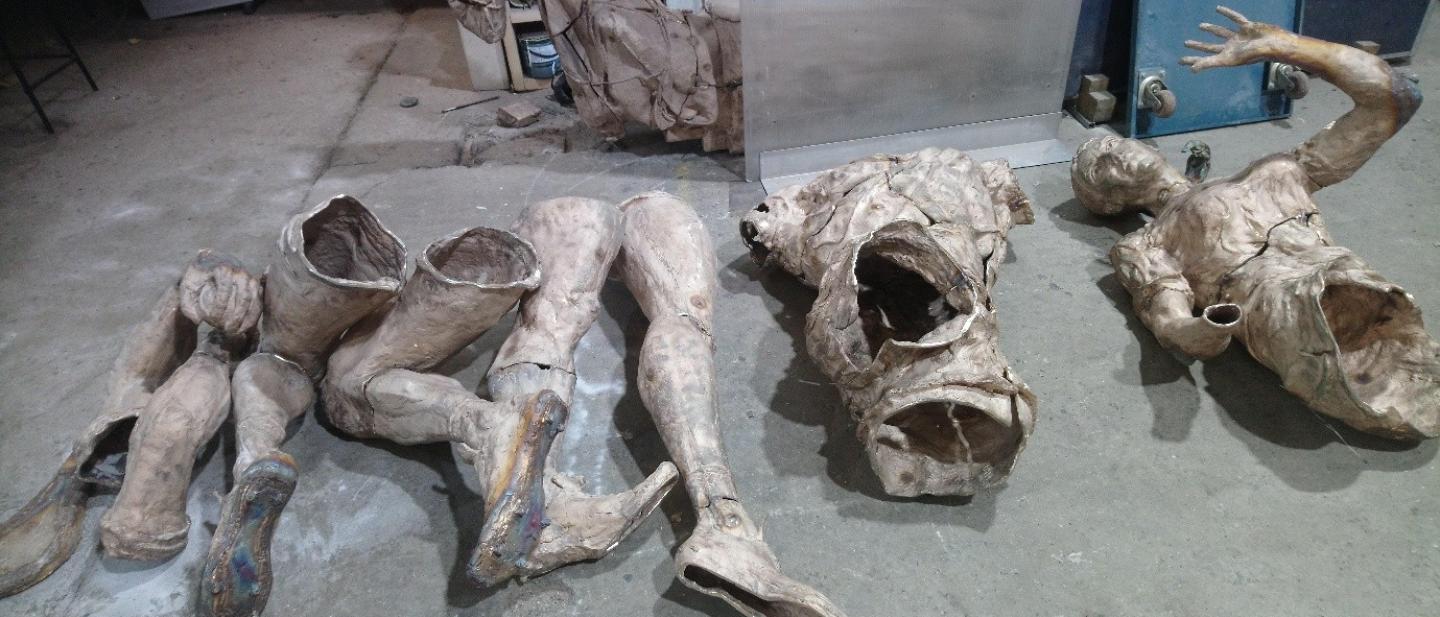
Bronze pieces of the sculpture, photo courtesy of artist
Finally, the sculpture undergoes finishing processes. A technician or metal worker removes any remaining casting material, welds together the separate parts, smooths the surface, and refines details through a process called chasing. The sculpture may also be polished and treated with chemicals to create a patina, giving the bronze its final colour and texture. Due to its size, the final bronze is reinforced with an internal steel armature. This stage completes the transformation from a simple idea into a durable and expressive work of art.

Assembly, photo courtesy of artist

Photo courtesy of artist
While the artist was in the final stages of creating the artwork, a large concrete plinth was constructed that would support the sculpture and have it tower over the thousands of enthusiastic supporters that would enter the gates and enjoy games at FBD Semple Stadium every year.
Ár gCluichí Féin is a celebration of Gaelic sport and Tipperary GAA and will become a landmark that commemorates participation and connection across the county. It is the first example in Ireland of a sculpture that includes a female GAA player. It represents the uniqueness of the sport, celebrating art, culture and heritage, and will inspire future generations of players and supporters.

Artist Aidan Harte with his sculpture, photo by Debbie Hickey, 2026